Does staying current with the latest research feel like a full-time job?
Reading dense academic papers can be a real struggle.
It takes hours, and it’s easy to lose focus.
Imagine if you could turn your commute or workout into a productive learning session.
What if you could absorb complex information while doing other things?
This guide shows you how to listen to research papers in 2025.
We’ll show you the best tools and simple steps to transform your learning.
Get ready to save time, stay informed, and make research a part of your daily life.
Why Listen to Academic Papers?
Have you ever felt like you’re falling behind on the latest research?
It’s tough to keep up. Reading papers takes a long time.
But what if you didn’t have to read them?
Listening to academic papers is a new way to learn.
It changes how you get information.

Using a text-to-speech app, you can turn a full paper into an audio file.
This saves you so much time.
Here’s why listening to academic research is a great idea:
- You save time. You can listen to a paper while you’re doing other things. Maybe you are commuting to work. Or you’re at the gym. Perhaps you’re doing chores around the house. This lets you learn without stopping your day.
- You can focus better. Some people understand things more easily when they hear them. Listening to a text-to-speech tool can help you grab complex ideas. It’s like having a helpful narrator for your reading.
- You get more done. Turning your downtime into learning time is a big win. Instead of scrolling on your phone, you can have a full paper read aloud to you. This makes your day more productive.
- It’s great for everyone. Listening is a good option if you have trouble reading. It makes academic papers and other complex texts more accessible. You can use audio playback to control the speed and volume.
Best Tools for Listening to Research Papers
Ready to start listening? You have many tools to choose from.
Each one works a bit differently. Some are simple.
Others have additional features that are a huge help.
Here are the best tools for turning research papers into an audio form in 2025.

1. General Text-to-Speech Apps
These apps are easy to use. They take text from a file and read it aloud. They are perfect if you want to listen.
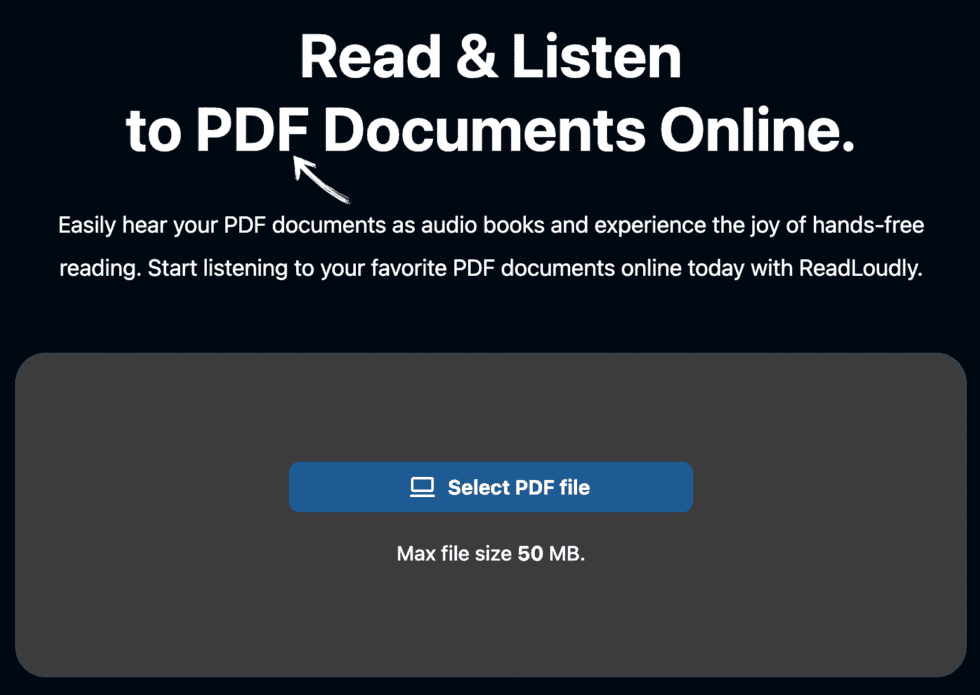
- Readloudly: This is a top choice. It has high-quality voices. It works great with PDF files.
- NaturalReader: This app has a free version. You can use it online or on your phone from Google Play. It reads most documents with ease.
2. AI-Powered Research Assistants
These tools are smarter. They use AI to help you understand complex content. They are designed for individuals who frequently read academic work.
- Key Features to Look For:
- Summaries: They can create short summaries of long papers.
- Handling Technical Terms: These tools can often explain difficult terms. This is a big plus for subjects like computer science.
- Integration: Some can connect to a reference manager you already use.
- Taking Notes: A new feature on some tools lets you take notes while listening.
- Examples:
- Listen to Research: This tool is built just for academic papers.
- Scite Assistant: This AI helps you get through papers faster.
3. Browser Extensions
These are quick and easy ways to get started. You don’t have to download a new app.
- Read Aloud (Chrome Extension): This popular Chrome extension can read any webpage. It’s simple and fast.
- Google Chrome’s Read Aloud feature: A simple built-in option. It can read a web page for you in just a few clicks. These options are often a huge help for people with learning disabilities.
How to Get Started
Ready to start listening to research papers? It’s easier than you think.
A little planning can make a huge difference.
Follow these steps to turn any article into a personalized podcast.

Here is a simple plan to follow:
- Choose Your Tool. Look at the tools we talked about. Pick one that works best for you. If you’re a student at a university, you may have free access to some software. You can try a simple Chrome extension or a dedicated app.
- Find Your Paper. Now, find the paper you want to listen to. Use search engines like Google Scholar or other academic journals. This is the first step to turning words into audio.
- Prepare the Document. Make sure the full text of the paper is in a good format. PDF is the most common. Some tools may struggle with tables and figures. It can be a challenge. You may have to skip these parts.
- Load It Up. Import the paper into your tool. This is super easy. Most apps let you upload files from your devices. Some even support different languages.
- Adjust Your Settings. You can change the voice and speed. Set it just right for you. Some tools allow for highlighting key sentences as you read. This is a bonus. It helps you see the important sections as you listen.
- Start Listening—finally, press play. You are now listening to the research. You can pause and re-listen to data and math sections as needed. This simple effort can save you a lot of time.
This method is great for researchers and students alike. It provides a new way to engage with key citations and concepts.
Advanced Listening Strategies
Just listening isn’t always enough.
To truly understand and remember the information, you need to be an active listener.
Here are some simple tips to help you get more out of every paper you listen to.

- Be an Active Listener: Don’t just let the words wash over you. Think about what you’re hearing. Pause the audio and consider the main points. Ask yourself questions as you go. This helps your brain retain the information.
- Change the Speed: You don’t have to listen at a fixed speed. When a section is easy to follow, you can speed it up. If you get to a complex part, slow it down. This gives you control and helps you focus on what matters most.
- Listen in Chunks: Trying to listen to a long paper all at once can be tough. Break it into smaller parts. For example, listen to the introduction one day and the conclusion the next. This makes the task feel less big and helps you focus.
- Re-listen to Important Parts: The abstract and conclusion of a paper are key. They have the most important findings. Listen to these sections more than once. This helps the main ideas stick in your mind.
Overcoming Common Challenges 😩
Listening to papers can be a game-changer, but you might face a few small problems.
Here’s how to deal with them.

1. Figures and Tables
A voice can’t describe a chart or a graph. These visuals often have important data.
When the narrator says “Figure 1,” you will need to pause.
Then you can look at the image on your screen.
You have to handle this part yourself.
2. Technical Jargon
Some papers use very specific words.
They can be hard to understand just by hearing them.
If you hear a word you don’t know, pause the audio. Look up the term.
This will help the rest of the paper make more sense.
3. Long and Dense Papers
A paper can be 50 pages or longer. Listening to it all at once can be tiring.
Don’t be afraid to take a break.
Listen to one section at a time.
It’s better to understand a small part than to get lost in the whole thing.
The Future of Listening🤖
The way we listen to papers is getting better all the time.
New technology, especially AI, is changing the game.
Here’s a look at what the future holds.

- AI’s Role: AI is going to make listening even smarter. It can help you identify the most important parts of a paper. It can even skip over parts that are not needed. This will save you a lot of time.
- Interactive Audio: Imagine listening to a paper and being able to talk back. You could ask questions about the text and get an answer right away. This would be like having a smart assistant reading with you.
- Personalized Feeds: AI can learn your interests. Then, it could find and summarize new papers just for you. This would create a special “podcast” of all the latest research in your field. This is the ultimate goal for many users.
Conclusion
Listening to research papers is a great way to stay informed.
It helps you save time and learn more efficiently.
You can use simple apps or smart AI tools to get started.
By using these tools, you can turn a boring task into something easy and fun.
Remember to be an active listener. Take notes and listen in small chunks.
The future of listening is bright, with new AI tools on the way.
Turn your free time into learning time. Readlloudly and discover a new way to consume information.
Don’t wait. Start listening to research today and make learning a part of your everyday life.
Frequently Asked Questions
Can I listen to papers from any academic journal?
Yes, as long as you have a digital copy of the paper, you can use a text-to-speech tool to convert it to an audio format.
Is using a text-to-speech app better than an AI tool?
It depends on your goal. A simple text-to-speech app is great for basic listening. An AI tool is better for deep analysis, as it can summarize and explain complex content.
What should I do about figures and tables?
Since a voice cannot describe these visuals, you need to pause the audio and view them on your screen. You will have to look at them yourself.
Is listening to papers good for people with learning disabilities?
Yes, for many people, listening is a much easier way to absorb new information than reading. It’s a great tool to help with learning disabilities.
Can I listen to papers while offline?
Yes, many text-to-speech apps let you download the audio files to your device. This allows you to listen to papers without an internet connection.